
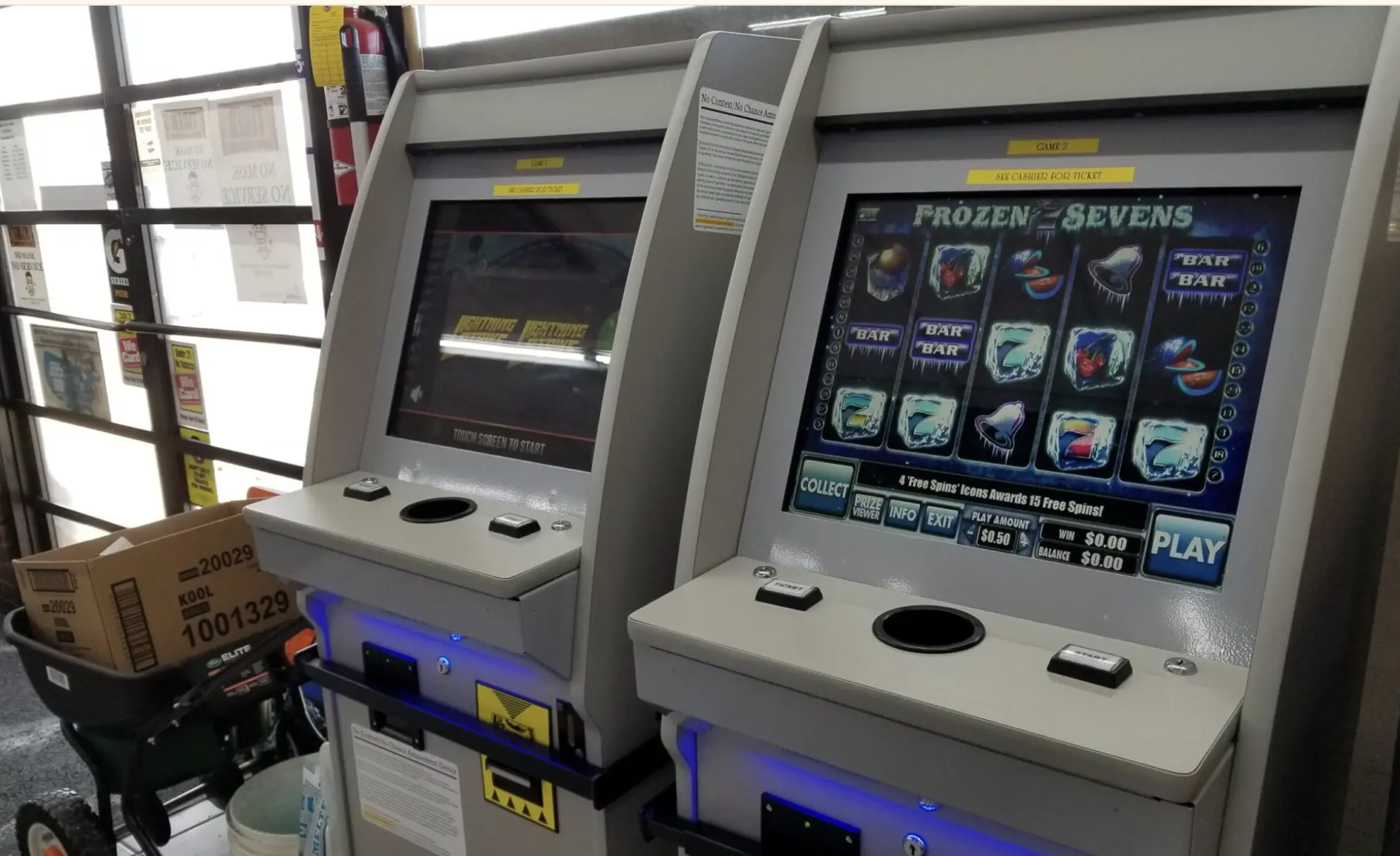
A bill that would create a state-run video lottery system to replace the current slot machine games received initial approval Monday in the Missouri House
By:Jason Hancock
Missouri Independent
A federal judge on Friday ruled that slot machines that have operated for years in bars, restaurants and convenience stores across Missouri are illegal gambling devices under state law.
The decision by U.S. District Judge John Ross lands as lawmakers debate whether to legalize the machines — and as Attorney General Catherine Hanaway has vowed to shut them down.
Ross’s 25-page ruling also follows an October federal jury verdict ordering one of the most prominent operators, Wildwood-based Torch Electronics, to pay $500,000 to a competitor that said it lost business after Torch repeatedly claimed its games were not gambling devices and therefore were lawful.
Ross pointed to that jury’s conclusions, writing that Torch’s machines “meet the statutory definition of ‘gambling device’ and are therefore illegal under Missouri law when played outside a licensed casino.”
A spokesman for Torch said the company remains convinced its machines are legal.
“Once the court decides the remaining issues before it and enters a final judgment, Torch will appeal, as we’re confident our games adhere to the letter and the spirit of Missouri law,” said Gregg Keller, Torch’s spokesman.
Torch has relied on high-profile lobbyists, political donations, relationships with prosecutors and litigation against enforcement agencies to protect its market. Over the past year, Torch donated $650,000 to political action committees run by its lobbyist, former House Speaker Steve Tilley. Warrenton Oil — whose convenience stores host many Torch machines — contributed another $135,000 to those PACs.
In 2023, then-Attorney General Andrew Bailey withdrew from defending the Missouri State Highway Patrol in a lawsuit brought by Torch after receiving campaign contributions from committees funded by the company.
Hanaway, who took office last year after Bailey stepped down for a job with the FBI, has argued there is no gray area: the machines are illegal. Last week, her office filed lawsuits against retail shops in Dunklin County alleging the businesses were operating illegal gambling machines on their premises.
In testimony before the Missouri House Budget Committee earlier this month, Hanaway said her office is also assisting with a federal investigation into illegal slot machines in Missouri, involving what she described as “money laundering and banking” questions.
Ross noted that he initially declined to issue a broader declaration on the machines’ legality after the October verdict. But he said he changed course after concluding that the question had remained unresolved at the state level, citing “ongoing delay, inconsistent outcomes and resulting uncertainty in the state system.”
The Missouri House on Monday gave initial approval to legislation that would create a state-run video lottery system to replace the current games. Companies profiting from unregulated convenience store slot machines would have one year to pull their games off the market.
The Missouri Lottery would have authority to license video games for installation in retail locations across the state. The licensed machines would have to pay out at least 80% of the money wagered as prizes and about one-third of the profits would be dedicated to state education programs.
The bill would also impose a 3% tax on video lottery profits to aid local governments and would increase the fee casinos pay for each patron who enters the gaming floor from $2 to $4.
On Monday, the House adopted several amendments to the bill, including one adding an annual $250 fee per machine to go towards disability services. The money was pitched as an effort to help roll back Gov. Mike Kehoe’s proposed $80.7 million cuts to services that help people with disabilities live safely in their homes and participate actively in their communities.
“This amendment is about fiscal responsibility and moral responsibility,” said state Rep. Melanie Stinnett, a Republican from Springfield.
State Rep. Dean Van Schoiack, a Republican from Savannah, pointed to the judge’s ruling involving Torch in decrying the legalization bill during Monday’s debate. He said these slot machines are “already illegal” and Missouri should find a better way to pay its bills than “stealing” from its citizens with gambling devices.
The goal of the bill is ultimately about providing clarity in Missouri law, said state Rep. Bill Hardwick, a Republican from Dixon sponsoring the legislation.
“There are illegal games out there. There are games of different varieties,” he said. “We owe it to business owners to clarify the law.”