
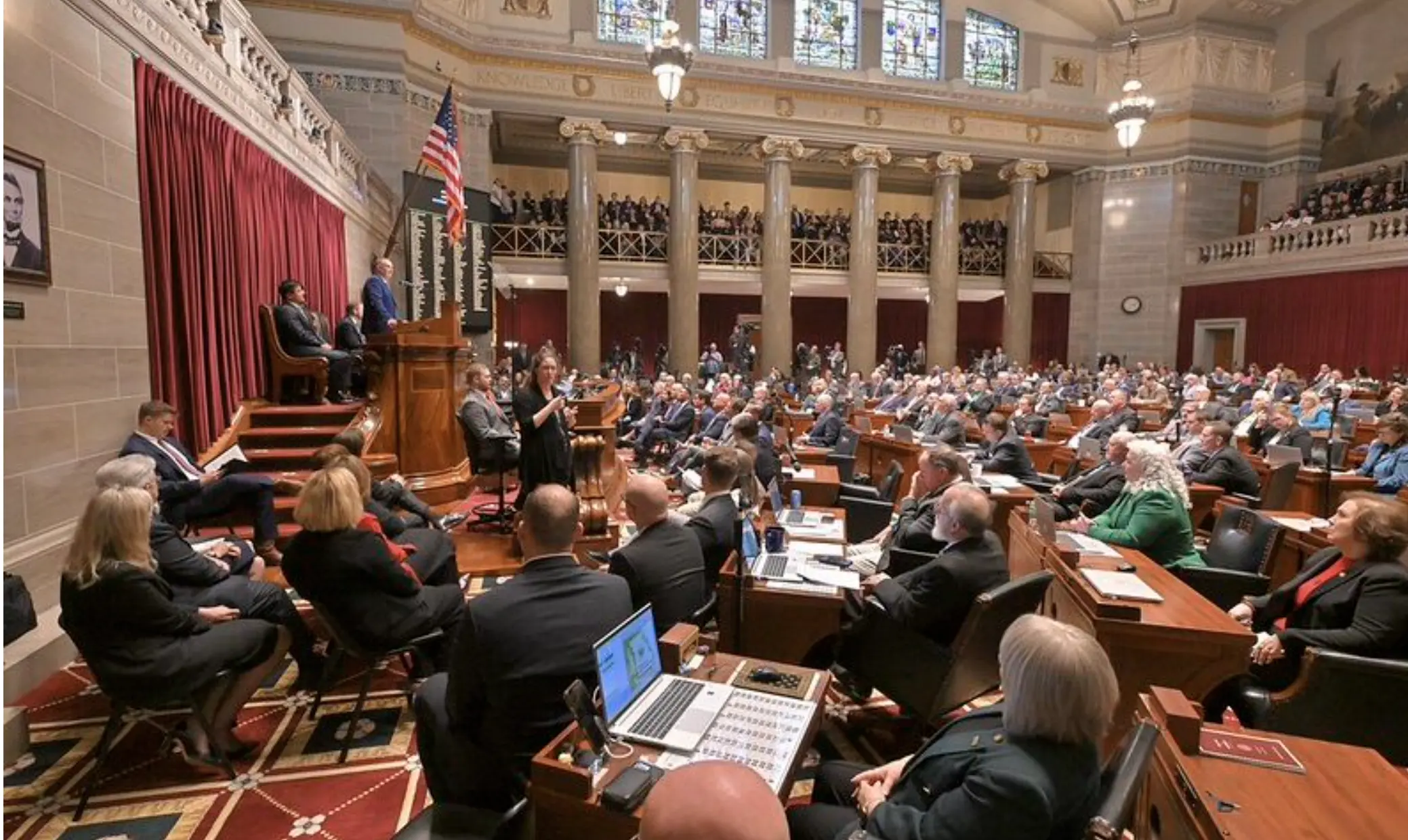
From a strained budget and fights over Medicaid and child care to tax cuts, gray-market slot machines and Senate gridlock, the second half of Missouri’s legislative session is packed with big decisions and little time
By:Jason Hancock
Missouri Independent
Legislative spring break is over, and Missouri lawmakers return to the Capitol on Monday with a packed agenda and a May 15 deadline to adjourn.
The second half of the session begins with a tighter budget picture, unresolved fights over taxes and public benefits, and a Senate that has already shown it can consume time faster than leaders can control it.
Many of the session’s biggest debates are also connected. Tax cuts could make the budget harder to balance. Budget pressure sharpens fights over Medicaid, disability services and child care. And every major issue still has to clear a Senate that remains one of the most unpredictable forces in the building.
Here are five things to watch as lawmakers head into the final stretch:
1. The budget squeeze is about to shape everything else
Every year, the budget is the legislature’s central obligation. This year, it is also the clearest measure of how much room lawmakers really have left to maneuver.
Gov. Mike Kehoe took office promising a conservative budget, but lawmakers have spent the first half of session wrestling with warnings that Missouri’s revenue cushion is shrinking. A budgeting error discovered earlier this year improved the picture somewhat, but it did not erase the larger problem that the state is no longer swimming in surplus cash.
That matters because nearly every major debate now runs through the budget. Spending for higher education, disability services, child care and Medicaid all compete with Republican pressure for tax relief and demands to preserve core programs. Internal disagreements within the GOP have also made clear that there is no single, settled vision for how to balance those priorities.
In the final weeks, the question will not be what lawmakers want to fund. It will be what survives.
2. Safety-net fights are no longer just budget line items
Some of the most emotional and politically delicate battles of the session involve programs that serve Missourians with the fewest alternatives.
Proposed cuts to developmental-disability programs have already sparked intense pushback from families, caregivers and service providers, who warned lawmakers that reductions could ripple quickly through home- and community-based care. At the same time, lawmakers are considering child-care subsidy cuts that advocates say could fall hardest on foster children and low-income families.
Those fights are happening alongside a broader ideological debate over public assistance. Republicans are advancing a plan to put Medicaid work requirements in the Missouri Constitution, even as the state weighs the cost of complying with new federal Medicaid rules.
Taken together, those issues make the second half of session a test of how far lawmakers are willing to go in reshaping the safety net. It is one thing to call for cuts or tighter rules in the abstract. It is another to do so while families are warning of immediate consequences for care, employment and stability.
That tension is likely to remain one of the Capitol’s most potent fault lines in the session’s homestretch.
3. Tax cuts move into a more difficult phase
Missouri Republicans remain deeply committed to tax cuts. The harder part is explaining how all the numbers are supposed to work.
The House has already advanced a proposed constitutional amendment to phase out the state income tax and give lawmakers broad authority to expand sales taxes to make up the difference. Supporters describe it as a long-term restructuring of the tax code. Critics see a plan that could shift more of the burden onto consumers while leaving key details unresolved.
The timing makes the fight even more complicated. The push comes just as lawmakers are confronting a tighter budget environment and difficult choices over funding public services.
That does not mean tax-cut proposals are doomed. It does mean senators will face more pressure to answer questions that were easier to glide past earlier in the session.
Who pays more? What gets taxed that is not taxed now? And how quickly could Missouri move toward income-tax elimination without destabilizing the budget? Theoretically, these questions can wait until voters weigh in later this year. But Democrats and skeptical Republicans will surely demand some answers before the amendment ever gets that far.
4. Lawmakers may finally have to decide what to do about gray-market slot machines
For years, Missouri has tolerated unregulated video gambling machines in gas stations, bars and other small businesses.
This session has brought fresh pressure to resolve it. A federal judge ruled last month that the machines at the center of one major case are illegal gambling devices. Meanwhile, the Missouri House narrowly passed legislation to regulate a video lottery system, offering lawmakers a path to legalize and tax a market that already exists in practice.
Now the issue moves to the Senate, where support is much less certain.
That makes this one of the session’s clearest fork-in-the-road debates. Lawmakers can try to bring the machines into a regulated system and capture revenue, or they can take the judge’s ruling as a sign that the state should stop managing the gray area and start shutting it down.
Either way, the status quo looks harder to maintain.
5. Senate dysfunction could still scramble the whole ending
The Senate remains the chamber most capable of derailing the best-laid plans of everyone else in the building.
Democrats spent the opening months of session slowing the chamber, fighting over gubernatorial appointments and forcing Republicans to burn time on procedure. Even relatively low-profile matters have gotten tangled in retaliation and procedural conflict.
That matters more in March and April than it did in January.
The closer lawmakers get to adjournment, the more floor time becomes precious. The budget has to move. House priorities begin stacking up. And every delay carries a higher price, because bills can die not from lack of support but from lack of time.
That is why the Senate may be the story behind all the other stories. On taxes, gambling, social services and the budget, the outcome may depend not just on the votes, but on whether the chamber can function well enough to get to them.