
By:Jason Hancock
Missouri Independent
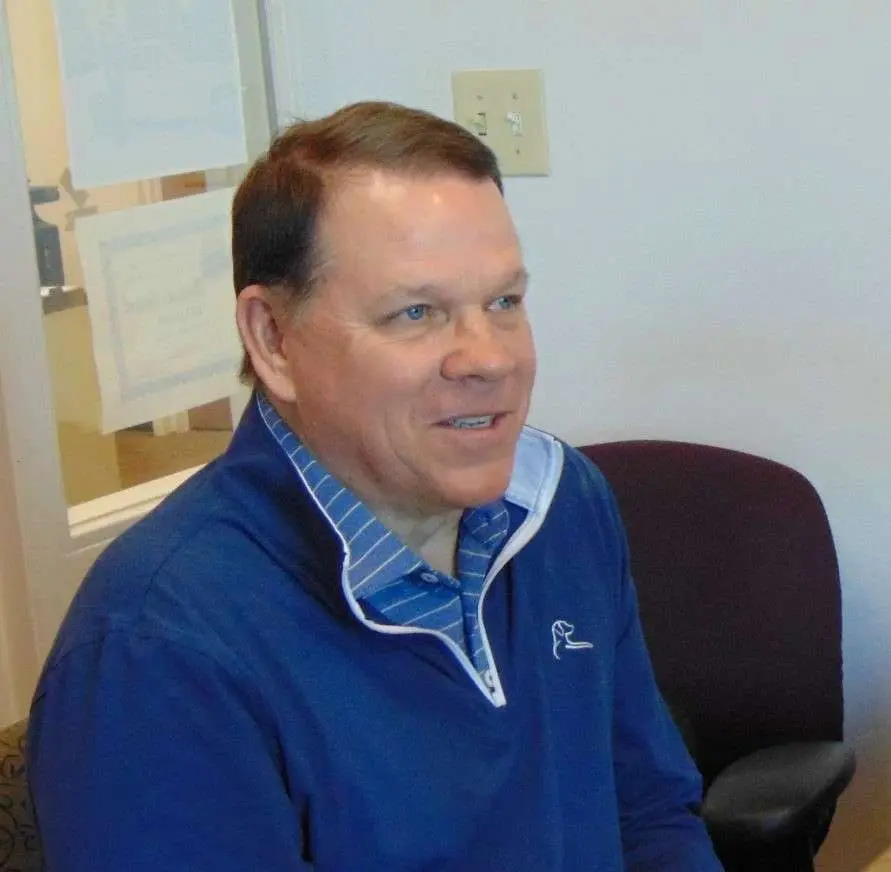
Sam Graves’ retirement announcement Friday marked the exit of one of the few Missouri politicians in Washington who had turned time in office into real institutional power.
Graves said this will be his final year in Congress, ending a career that began in the Missouri House in 1992, moved quickly through the state Senate and carried him to Washington in 2001. He is leaving at 62 as chairman of the House Transportation and Infrastructure Committee, a perch with unusual power to shape the roads, airports, rail lines and public works projects that matter back home.
Graves was never the state’s loudest politician or its most visible national figure. But over a quarter-century in Congress, the Tarkio Republican built influence the old-fashioned way — through seniority, committee work and a reputation for knowing how to move legislation in a House that increasingly rewards performance over production.
But as Graves grew more powerful in Washington, he also drew criticism back home from constituents and challengers who said he had become harder to see, harder to reach and less willing to subject himself to unscripted encounters with voters across the sprawling 6th District.
Graves entered politics as a 27-year-old farmer from Tarkio who wanted, as he put it in his retirement message, to stand up for “a way of life and his community.” He studied agronomy at the University of Missouri, served one term in the Missouri House and two in the Missouri Senate, then won the congressional seat vacated by Democrat Pat Danner in 2000.
In a Congress defined by spectacle, shutdown threats and performative warfare, Graves carved out a lane as a legislator who still believed compromise was part of the job. Roll Call described him in 2024 as “old school,” and he embraced the label, calling Transportation and Infrastructure “a work committee, not a show committee.”
For Missouri, that translated into something tangible. His committee’s jurisdiction reached across highways, bridges, rail, transit, aviation, waterways, pipelines and public works. He was a central player in the 2024 FAA reauthorization and in aviation-safety legislation passed after the deadly 2025 collision near Washington, and he had been working on the next multiyear highway bill before announcing his retirement.
U.S. Rep. Rick Larsen, the House Transportation ranking member and a Democrat from Washington state, said Congress was losing “a fierce advocate for infrastructure investment and transportation safety.”
The benefits of that seniority were not confined to the rural counties he represented.
Kansas City Mayor Quinton Lucas, a Democrat, credited Graves’ involvement with helping deliver projects “from KCI Airport to the Kansas City Streetcar.” Democratic U.S. Rep. Emanuel Cleaver of Kansas City called Graves “a dedicated public servant to Northwest Missouri for decades and a dear friend to me.”
But Graves’ long tenure in Congress has not been without controversy.
He joined other Missouri Republicans in planning to object to certifying the 2020 presidential election results, lending institutional weight to false claims about a stolen election that helped inspire a violent mob to storm the U.S. Capitol on Jan. 6, 2021.
Then there were the times when Graves’ personal relationships seemed to intersect with his office, such as when the Office of Congressional Ethics found “substantial reason to believe” his conduct created the appearance of a conflict of interest. It stemmed from Graves approving a friend to testify at a Small Business Committee hearing on biodiesel and ethanol subsidies without disclosing the witness and Graves’ wife shared investments in renewable-fuel production.
The House Standards Committee later found no rules violation and closed the matter.
One of Graves’ close allies over the years was Stan Herzog, the late St. Joseph businessman whose company operated in rail and heavy-highway construction and was a major source of campaign money for the congressman.
In 2007, Roll Call reported Graves had accepted free use of a vintage airplane owned by Herzog. The same report noted Herzog entities were paying lobbyists on railroad issues and transportation funding while Graves sat on the House Transportation and Infrastructure Committee, and that a road project Graves touted as an economic-development win also appeared likely to benefit Herzog property and operations near the route.
Graves also faced criticism that he became harder to reach as his tenure stretched on.
In a 2024 KCUR profile of the 6th District, voters in Hannibal said they rarely saw Graves in person and complained that outreach to his office often produced little more than form responses. One Republican primary challenger said residents felt ignored and mainly wanted a congressman who would answer them, even if they did not like the answer.
That frustration spilled into public view last year, when organizers in St. Joseph staged an “empty chair” town hall after Graves declined to attend.
In his retirement message, Graves said he was entering “the 4th quarter” of his life with more left in him. He said he’d probably be on a tractor over the weekend, and back in Washington by Monday.
Republicans are already jostling to get into the race to replace Graves. Voters will have a new member of Congress by November. It will take much longer to replace 25 years of seniority, a committee chairmanship and a fluency in the unglamorous mechanics of power.
“Maintaining our strong democratic republic will always depend on good people stepping up to serve from every corner of our great nation,” Graves said. “I’m grateful for my colleagues in both parties, for the people I’ve worked alongside, and even for the opponents who challenged me and made me better. Public service isn’t easy. It takes hard work, humility, a thick skin, and a willingness to fight for what’s right.”